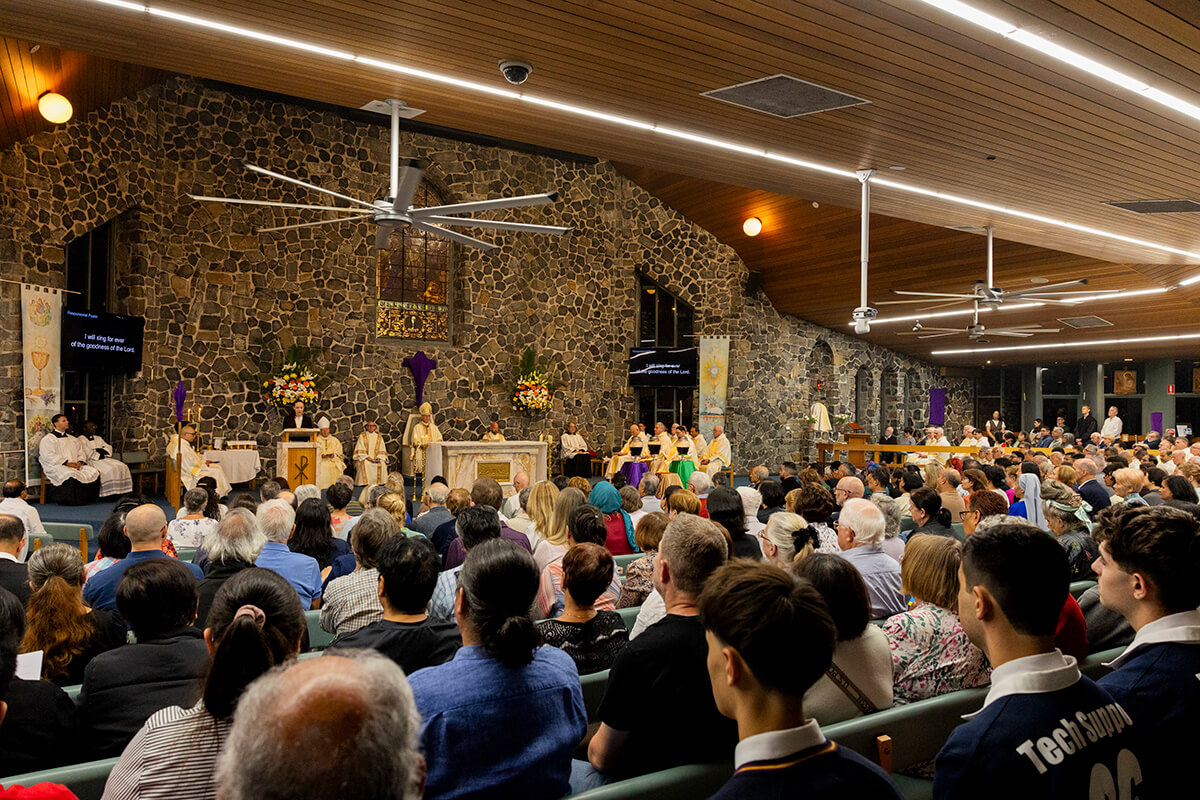
A majority of Catholics remain deeply attached to their faith despite three-quarters not attending Mass weekly, and Australia’s Catholic Bishops want to bring them back.
The Australian Catholic Bishops Conference commissioned the National Centre for Pastoral Research to study the factors influencing the reduction in the practice of regularly attending Sunday Mass, aiming to identify pastoral ways to encourage them back to weekly Mass attendance.
“Rather than a single national response, therefore, this research is being entrusted to bishops to take forward locally,” said Bishop Greg Bennet, Bishop-delegate for pastoral research and Vice President of the Australian Catholic Bishops Conference.
“The hope is that each diocese will listen carefully to what people have shared and respond with pastoral initiatives shaped by their own communities and contexts.
“We know there are many people who are open to re-engagement with the Church and we need to work harder to find ways of making those re-connections.”
The first phase of the research project - Absent from the Table: Catholics in Australia Who Do Not Regularly Attend Sunday Mass - involved an online survey of 1973 self-selected Catholics aged 18 and over, across seven states and territories.
Phase two consisted of in-depth interviews with 67 volunteers from the first phase, providing rich insights into personal experiences and motivations.
It found even though three-quarters of respondents attended Mass less than weekly, two-thirds said their faith was very important to them and 55 per cent affirmed belief in the Real Presence of Christ in the Eucharist. More than three-quarters also affirmed belief in Jesus as the Son of God.
Despite their irregular attendance, most participants remained deeply connected to their faith.
Respondents expressed their Catholic identity primarily through praying regularly (64 per cent), as well as sending their children to a Catholic school (44 per cent), sharing their faith with others (40 per cent), wearing religious symbols or displaying them at home (40 per cent) and volunteering in the wider community (39 per cent) or parish (29 per cent).
A majority (62 per cent) reported other connections, such as working or volunteering in Catholic schools and hospitals, and participating in prayer and study groups, youth events, religious communities and Catholic cultural or social clubs.
Emeritus Professor Gabrielle McMullen AM, chair of the Australian Catholic Council for Pastoral Research, said the research was aimed at helping the Church listen to the people who remain deeply connected to their Catholic identity but who are not engaged deeply with the Church.
“With the Absent from the Table project, the Australian Catholic Bishops Conference has sponsored research which has brought the voices of some 2000 Australian Catholics to inform current ‘pastoral concerns’ of the Australian Church and future planning,” she said.
“The researchers and reference group are to be commended on a substantial study which can inform evangelisation in 21st century Australia.”
Since the research was conducted, many dioceses have launched pastoral strategies and synod processes which have, at least anecdotally, had a positive impact on re-engaging Catholics.
The full report can be found at the National Centre for Pastoral Research website.